

Fake profiles exist on every dating platform, and Russian dating sites are no exception. The fraud operations targeting Western men through international dating platforms are organized, well-resourced, and specifically designed to exploit the genuine emotional investment that people bring to the search for a real relationship. Knowing how to recognize fake profiles quickly and confidently will protect your time, your money, and the emotional energy you bring to a process that, on legitimate platforms with real women, genuinely works. These ten warning signs cover the most consistent patterns of fraudulent activity on Russian dating sites.
1. Photos That Look Too Professional
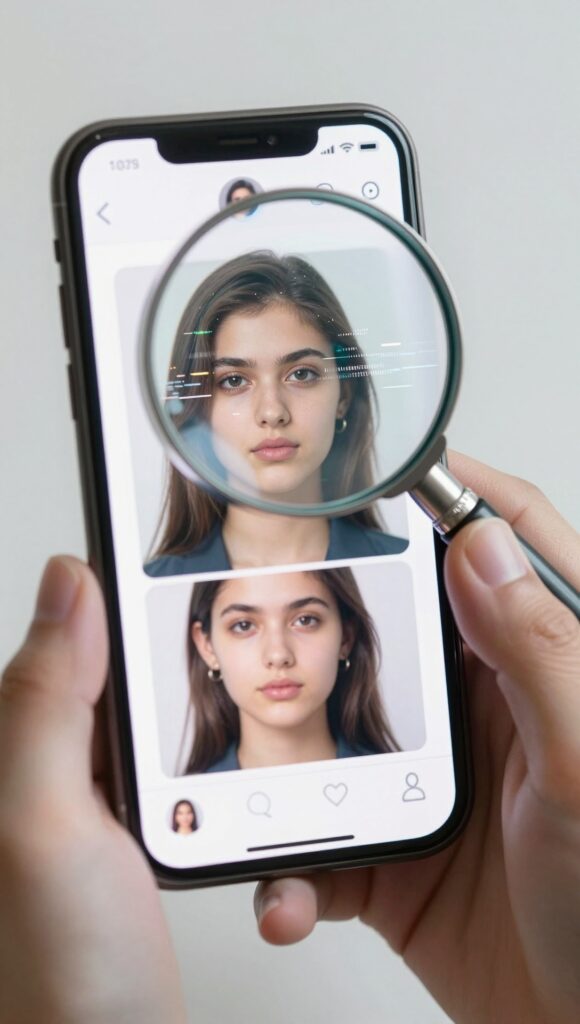
If every photo in a profile looks like a professional modeling shoot — perfect studio lighting, carefully composed poses, flawless presentation in every single image with no candid moments, no group photos, no ordinary daily life visible anywhere — treat it as an immediate flag and run a reverse image search before investing any further time. Google Images and TinEye both allow you to search by image and will surface any other contexts in which that photo appears online. Scammers frequently steal photos from models, Instagram accounts, or stock photo libraries and repurpose them for fake profiles. This search takes two minutes and catches a significant proportion of fraudulent profiles immediately.
Genuine women’s photo collections include variety — a mix of more composed photos alongside selfies, photos with friends or family, ordinary moments from daily life, different settings and different looks over time. The absence of this variety is itself informative. A profile with twelve photos that all look like they belong in the same professional shoot is considerably more suspicious than one with a mix of photo types and qualities, even if the composed photos are less polished.
2. Immediate, Excessive Interest Before Any Real Exchange
A genuine Russian woman evaluates potential partners carefully — she is not going to develop immediate intense feelings for someone whose profile she glimpsed for thirty seconds. If a woman messages you within minutes of you viewing her profile with effusive compliments, declarations of immediate connection, or expressions of deep attraction before you have exchanged a single word, she is almost certainly not a real person responding genuinely to you. She is either a bot or a paid operator sending the same message to dozens or hundreds of men simultaneously.
Real interest develops through actual exchange — through what each person says and how the other responds to it. Genuine warmth and enthusiasm that emerges across a real conversation is something entirely different from manufactured intensity that appears before the conversation has begun. The latter is a pattern, not a person, and recognizing it early saves considerable wasted investment.
3. Consistent Refusal to Video Call
This is perhaps the single most reliable indicator of a fake profile, and it is worth treating as close to definitive when it appears consistently rather than occasionally. If a woman makes excuses across multiple requests to avoid video calls — camera broken, internet too slow, no smartphone, not ready yet, maybe next week — she is not who she claims to be. The technical excuses may vary, but the pattern of avoidance is consistent because it has to be: a paid operator or bot cannot produce a video call with a real woman who matches the stolen photos in the profile.
Genuine women who are interested in genuine relationships want to video call. The transition from text to video is one they tend to look forward to rather than avoid, because it is the moment the connection becomes real rather than abstract. A woman who has been warm, engaged, and apparently deeply interested in written communication but who consistently finds reasons to avoid video calls is communicating something specific and important about the nature of her interest and her existence.
4. Generic Messages That Could Have Been Sent to Anyone
Scam operations send copy-paste messages to hundreds of men simultaneously. The tell is specificity — or the absence of it. If her messages feel generic, reference nothing specific you have said or written, and could have been sent word-for-word to any man on the platform, she is not reading your messages and responding personally to you. She is running a script.
Compare this with what genuine engagement looks like: follow-up questions that build on what you said in your previous message, references to specific things you mentioned, responses that reflect actual attention to the specific content of your communication. The absence of this specificity is not subtle once you are looking for it. A message that begins “I was so happy to get your message, you seem like a very special and warm man” without referencing anything specific about what you wrote is a script. A message that begins “I was thinking about what you said about your sister’s wedding — did it go the way you hoped?” is a real person paying attention.
5. Love Declarations Within Days or Weeks
No genuine person develops deep romantic love for someone they have never met in person within the first two weeks of text-based messaging. Rapid declarations of love — “I have never felt this way so quickly,” “you are already the most important person in my life,” “I think I am falling in love with you” appearing within days of first contact — are a standard manipulation technique in romance fraud. They are designed to create emotional investment and the feeling of a relationship that the person will then be reluctant to jeopardize by questioning a subsequent financial request.
Genuine connection develops at a pace that reflects actual getting-to-know-each-other rather than scripted escalation. Warmth, genuine interest, and developing affection over weeks and months of real conversation are entirely different from manufactured intensity that appears too early and escalates too quickly. If the emotional intensity of the relationship feels out of proportion to how long and how substantively you have actually been communicating, trust that instinct.
6. Any Financial Request for Any Reason
This is the definitive scam signal and the one with no legitimate exceptions. A sick relative who needs medical treatment. A visa fee she cannot cover. A plane ticket to come visit you. A customs emergency for a package she sent. A business crisis requiring temporary help. It does not matter what the story is or how compelling or urgent it sounds — if someone you have never met in person asks you for money, end the contact immediately and do not send anything.
Genuine women never request money from men they are dating online. This is not because they are all financially comfortable — it is because the social and relational dynamics of asking a man you have never met for money are obvious to any real woman, and no genuine woman with genuine interest in building a real relationship would risk poisoning that relationship with a financial request. The request itself is the signal, not the story attached to it.
7. Stories That Shift or Contradict Over Time
Scammers operating fake profiles often lose track of the fictional backstory they have constructed, particularly when managing multiple conversations simultaneously. If she mentioned a sister in an early message and denies having siblings three weeks later — if details about her profession, her city, her family situation, or her personal history shift without explanation or acknowledgment — she is not being honest about who she is.
Keep a mental note of the specific details people share about themselves in early conversations, not as a tracking exercise but as the natural byproduct of genuine interest. Real people repeat the same details consistently because they are describing something that actually happened. Fabricated details drift because they were never anchored in reality. Noticing drift does not require suspicion; it requires the same attention to what someone says that genuine interest naturally produces.
8. Immediate Pressure to Move Off-Platform
Legitimate dating platforms have anti-scam monitoring systems that flag suspicious behavior patterns and investigate accounts that generate complaints. Scammers know this, which is precisely why they push immediately to move communication to private WhatsApp, Telegram, or personal email — where they are no longer subject to platform monitoring and where the protection the platform offers no longer applies to you.
A genuine woman on a reputable platform is entirely comfortable communicating through the platform’s own tools for as long as it takes to develop real trust and genuine connection. There is no reason for her to urgently need private communication before that trust is established — unless the urgency is manufactured to move you somewhere less protected before the financial request arrives.
9. No Verifiable Social Media Presence
Most real women in their 20s, 30s, and 40s have some form of social media presence — not necessarily public or extensive, but something that reflects an actual life being lived by an actual person. A woman who claims to have no social media presence of any kind, who actively discourages you from looking, or whose claimed social media accounts do not match the profile photos or biographical details she has shared is worth treating with significant skepticism.
This is not a definitive signal on its own — some people genuinely maintain minimal online presence — but it is worth noting as part of a broader pattern assessment rather than treating in isolation.
10. Availability That Does Not Match Real Life
Real people have jobs, sleep schedules, family obligations, and social lives that create natural gaps in their availability for online communication. A woman who is always online, who responds immediately regardless of what time it is in Russia, and who seems to have no other demands on her time or attention may be part of a paid operation rather than a genuine individual living a real life. The always-available, always-immediately-responsive pattern is a byproduct of professional operations rather than real people, and it tends to be visible once you are paying attention to the rhythms of communication rather than only to its content.
The Best Protection: Start With a Reputable Platform
All ten of the warning signs above become considerably less likely when you choose a platform that takes verification and anti-scam monitoring seriously. Platforms with manual profile verification — requiring government-issued ID before profiles are approved — dramatically reduce the proportion of fake profiles in the dating pool from the outset. Active anti-scam teams that investigate reports and remove suspicious accounts provide ongoing protection rather than just initial filtering.
Qpid Network* has operated since 2001 and is among the most established platforms connecting Western men with Eastern European and Asian women. It offers manual profile verification, integrated video chat within standard membership, an active anti-scam team, and a database of over one million verified members. For Western men serious about finding genuine connections through Russian dating services, it represents a significantly lower-risk starting point than less established alternatives.
Platform selection is your first and most important line of defense. The warning signs in this guide give you the tools to protect yourself within any platform — but choosing a platform that is actively working on the same side you are makes every subsequent step considerably more reliable.