

The best evidence that Russian international dating works — genuinely works, producing real relationships and real marriages rather than just optimistic possibilities — is the testimony of the men who have experienced it. Statistics and platform claims are easy to manufacture; detailed, specific personal accounts from real men describing real relationships are considerably harder to fake at scale. The stories below are composite accounts drawn from genuine experiences reported across international dating communities, expat forums, and direct testimonials. They represent the kinds of relationships that Russian dating services produce when both people approach the process with genuine intentions, genuine effort, and the patience to let something real develop at its own pace.
David and Marina — Seattle and Moscow
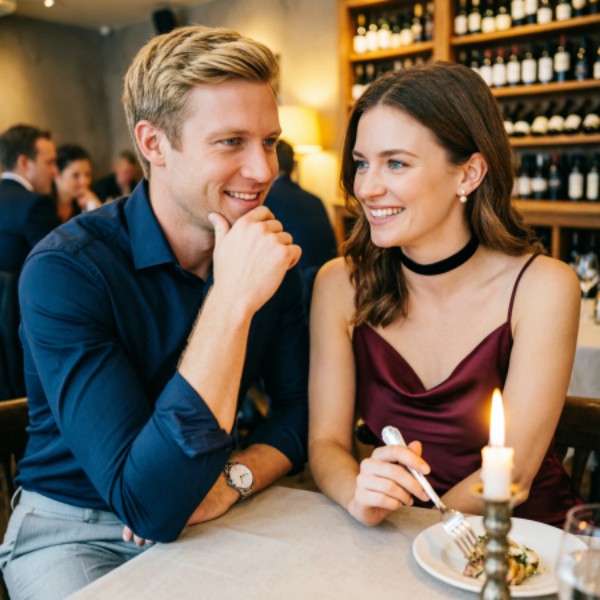
David was 51, a software architect from Seattle, when he created his profile on a Russian dating platform on a Friday evening with genuinely low expectations. He had been divorced for six years and had tried domestic dating apps with consistently frustrating results — not for lack of interesting women, but for what he describes as a consistent mismatch between what he was looking for and what the available pool seemed to be offering. He was looking for genuine intellectual partnership, real family values, and the kind of unconditional loyalty that he had begun to think might simply not be available to a man his age in his circumstances.
Within two weeks of joining the platform, he was in daily video calls with Marina, 38, a pediatrician from Moscow. “She was unlike anyone I had ever talked to,” he says. “Brilliant, genuinely warm, funny in a way that surprised me — Russian humor is dryer than American humor and it took me a couple of conversations to calibrate, but once I did, we laughed constantly. She was also completely direct about what she was looking for in a way that I found both slightly terrifying and deeply refreshing.”
The video calls became the anchoring rhythm of his weeks. He found himself researching Moscow — its architecture, its neighborhoods, its cultural life — not because he thought he was supposed to but because Marina mentioned things in passing that he genuinely wanted to understand. When she mentioned a Moscow park she loved, he looked it up and brought what he found to the next conversation. When she mentioned a Russian author she was rereading, he found a translation and started it that week. “I realized at some point that I was doing things I hadn’t done since my twenties — reading things because someone I was interested in cared about them, discovering things because another person’s world was opening up to me.”
After six months he flew to Moscow for twelve days. He met her parents on the fourth day. “Her mother served a meal that I still think about. Her father asked me very direct questions about my intentions in a way that would have seemed intrusive in an American context and felt completely right in the Russian one. I answered every question honestly. At the end of the evening he poured us both a glass of something and nodded at me in a way that Marina later told me meant I had been accepted.”
He proposed in Gorky Park nine months after their first message. Marina moved to Seattle fourteen months after that, following the K-1 visa process. They have been married for three years and have a one-year-old son. “I wake up grateful every single day,” he says. “Not in a performed way — genuinely. I did not know relationships could feel like this.”
Robert and Yulia — London and Novosibirsk
Robert was 56 and had been widowed for four years when his adult son — with a directness that Robert describes as both irritating and ultimately correct — suggested he try an international dating service. “He said, ‘Dad, you’re not going to meet anyone sitting in the house reading,'” Robert recalls. “He was right. I was not going to meet anyone sitting in the house reading.”
He met Yulia, 44, a university literature professor from Novosibirsk, through a Russian dating platform. She had written her doctoral thesis on Dostoevsky. He had read Dostoevsky — seriously, repeatedly, with genuine engagement — over the course of a long intellectual life that had always prioritized literature. Their first conversation lasted three hours and covered The Brothers Karamazov, the specific quality of Siberian winter light, the differences between British and Russian approaches to academic life, and the question of whether genuine grief ever fully resolves or simply becomes integrated into a life that continues.
“She made me feel intellectually alive in a way I had not felt in years,” he says. “My wife had been my intellectual companion for thirty-one years, and I had not fully understood until Yulia how much I had been missing that specific kind of engagement. Not conversation as social exchange but conversation as genuine mutual exploration. Yulia thinks carefully and speaks precisely and listens with the kind of attention that makes you think more carefully yourself.”
They met in person in Novosibirsk seven months after their first exchange — Robert had expected to be intimidated by Siberia and found instead a city of genuine culture, genuine warmth, and people who hosted him with a generosity he had not previously encountered. He met Yulia’s colleagues at the university, her close friends, her elderly mother who spoke no English and communicated entirely through warmth and food. He was, he says, completely received.
They married in London eighteen months after first contact. Yulia continues to teach Russian literature, now at a London university. “She has completely transformed my home,” Robert says. “It is warm in a way it has never been before. She has opinions about where things go and why, she cooks on Sunday afternoons with a radio playing Russian folk music, she has brought her world into my world and I am a better version of myself for living in it.”
Thomas and Natasha — Toronto and St Petersburg
Thomas was 48 and recently divorced when he decided, with significant reluctance, to try Russian international dating. He had read enough about it to have absorbed the standard skepticisms and had specifically not read enough to have encountered the consistent reality reported by the men who had actually done it. He approached it, he says, as an experiment he expected to fail instructively.
He met Natasha, 35, a classical pianist from St Petersburg, through a platform he had spent two weeks evaluating before joining. She played guitar — badly, he admits — and she played piano at a professional level, which is a different thing entirely from the shared interest he had initially assumed the overlap represented. Their first video call included her playing Chopin for him, spontaneously, after he asked what she was working on. “I knew within the first ten minutes,” he says. “Not that we were going to get married — I did not allow myself to think that far. But that this was a person I needed to keep talking to, whatever happened.”
What happened over the following months was a relationship built substantially around music — he sent her recordings of music he was listening to, she sent him recordings of music she was practicing, they talked about what specific pieces meant to each of them and why, they built a shared vocabulary around something that mattered to both of them in ways that had nothing to do with international dating and everything to do with two people discovering genuine common ground. “Music is a language,” he says. “It turned out we spoke the same dialect.”
He visited St Petersburg during the White Nights — the summer period when the city barely darkens at night and takes on a specific atmosphere of unreality and beauty that he describes as unlike anything he had previously encountered. He spent ten days there, most of them with Natasha and her family and friends, exploring a city that he had known as a cultural concept and discovered as a living place with a specific character and a specific claim on him. “St Petersburg is the most beautiful city I have ever seen,” he says. “And I have seen a lot of cities.”
They married the following spring in Toronto. Natasha teaches piano and performs with a chamber ensemble. Their home in Toronto, Thomas says, sounds different from any home he has previously lived in — there is always music, always something playing or being worked on, always the sound of someone taking something seriously. “I am more serious about my own playing than I have been since I was a teenager,” he says. “She has made me want to be better at the things I care about. That is what genuine partnership does.”
What These Stories Share — and What They Mean
The details of these three relationships are different — different cities, different ages, different circumstances, different cultural specific textures to how the connection developed. What they share is worth naming directly. Each relationship began with genuine intentions on both sides rather than with strategic calculation or fantasy pursuit. Each was built through sustained, specific, genuinely curious communication over months rather than through rapid escalation. Each involved an in-person meeting that confirmed and deepened rather than substituted for what had been built online. Each produced something that both people describe as qualitatively different from previous relationship experience — not in a dismissive way toward those experiences, but in an honest way about what this one feels like by comparison.
These are not exceptional outcomes. They are typical outcomes for men who approach Russian international dating with genuine intentions, adequate preparation, and the patience to let something real develop at its own pace. The men who find love through Russian dating services are not uniquely lucky — they are intentional, genuine, and willing to invest in a process that requires more than domestic dating typically asks while offering more than domestic dating typically provides.
Share Your Story
If you have found love through a Russian dating service and would like to share your experience, we would genuinely like to hear from you. Contact us through our contact page — with your permission, your story may provide exactly the encouragement that another man needs to take the step you took. The stories of men who have genuinely succeeded in this process are among the most useful things available to men who are considering it and are not yet sure whether it is real. If you are one of them, your experience matters beyond your own relationship.
If you are just beginning to consider Russian international dating and the stories above have made you curious about taking the first step, Qpid Network* is where we recommend starting — a platform that has been operating since 2001 with rigorous verification and a database of over one million genuine members. The journey described in each of the stories above began with a profile and a first message. Yours can too.